ONTARIO DAIRY GUIDE
Get information about all the products created right here in Ontario, from your everyday grocer to the most specialized products.
Fast-digesting whey. Slow-digesting casein. All 9 amino acids. As a natural source of protein, milk is an absolute champ that does the heavy lifting to support muscle repair and recovery.
Milk is good to the bone. Vitamin D in milk helps your body absorb its calcium, supporting long-term bone health, strong teeth, and muscle function.
With B vitamins, B12, vitamin A, and Vitamin D, your body’s sure to give milk an A+. These everyday nutrients help convert food into energy, support immune health, and maintain healthy vision.
Milk’s multitasking minerals include magnesium, phosphorus, potassium, selenium, and zinc. These team players pitch in to support key functions in the body from energy production, immune support, and muscle movement.
We all know how satisfying milk tastes, but did you know that fats are responsible for how satisfying it feels? They provide energy, help your body absorb nutrients, and makes sure every glass hits the spot.
Yes. Many people with lactose intolerance can still enjoy milk and other dairy foods. How much lactose a person can tolerate varies, so finding the amount that works for you is important.
Research shows that some people with lactose intolerance can tolerate 12–24 grams of lactose per day when it is spread throughout the day and consumed as part of meals. One cup (250 mL) of cow’s milk contains about 12–13 grams of lactose, and many people with lactose intolerance can tolerate this amount.
There are several ways to continue enjoying milk and dairy:
Finding the amount and types of dairy that work best for you, with support from a healthcare professional, can help you continue to include dairy as part of your diet and meet your nutritional needs
Source: Dairy Farmers of Ontario, Milk and Lactose Intolerance.
For children from 12 to 24 months, pasteurized whole cow’s milk (3.25% milk fat) is recommended once milk is introduced as a main beverage. Whole milk provides the fat and nutrients needed to support a young child’s growth and development.
Milk can be introduced between 9 and 12 months of age. Babies can continue to be breastfed or can be offered about 500 mL (2 cups) of whole milk per day. Milk intake should be limited to no more than 750 mL (3 cups) per day during this stage.
Whole milk is the recommended milk choice for children under age two because its fat content helps support growth and development.
After age two, children generally eat a wider variety of foods and may rely less on milk as a main source of nutrients. At this stage, pasteurized skim, 1%, 2% or whole milk can be offered, with up to 500 mL (2 cups) per day recommended to help meet nutrient needs.
Milk provides 15 essential nutrients, including protein, calcium, vitamin D, phosphorus, magnesium and potassium, which support normal growth and development, including bone health.
What about plant-based beverages? Plant-based beverages vary in their nutrient content depending on the type and product, some plant-based beverages may be lower in key nutrients, particularly protein, and are therefore not nutritionally equivalent to cow’s milk.
For infants and young children, plant-based beverages should not be used as a substitute for whole cow’s milk unless recommended by a healthcare professional. When choosing a beverage, it is important to consider whether it provides the energy, protein, fat, vitamins and minerals needed to support normal growth and development.
Source: Dairy Farmers of Ontario, Milk and Pediatric Nutrition.
Health Canada, Canadian Pediatric Society, Dietitians of Canada, and Breastfeeding Committee for Canada. Nutrition for Healthy Term Infants: Recommendations from Six to 24 Months: A Joint Statement. Ottawa, ON: Health Canada; 2014
Health Canada, 2014: https://www.canada.ca/en/health-canada/services/infant-care/infant-nutrition.html
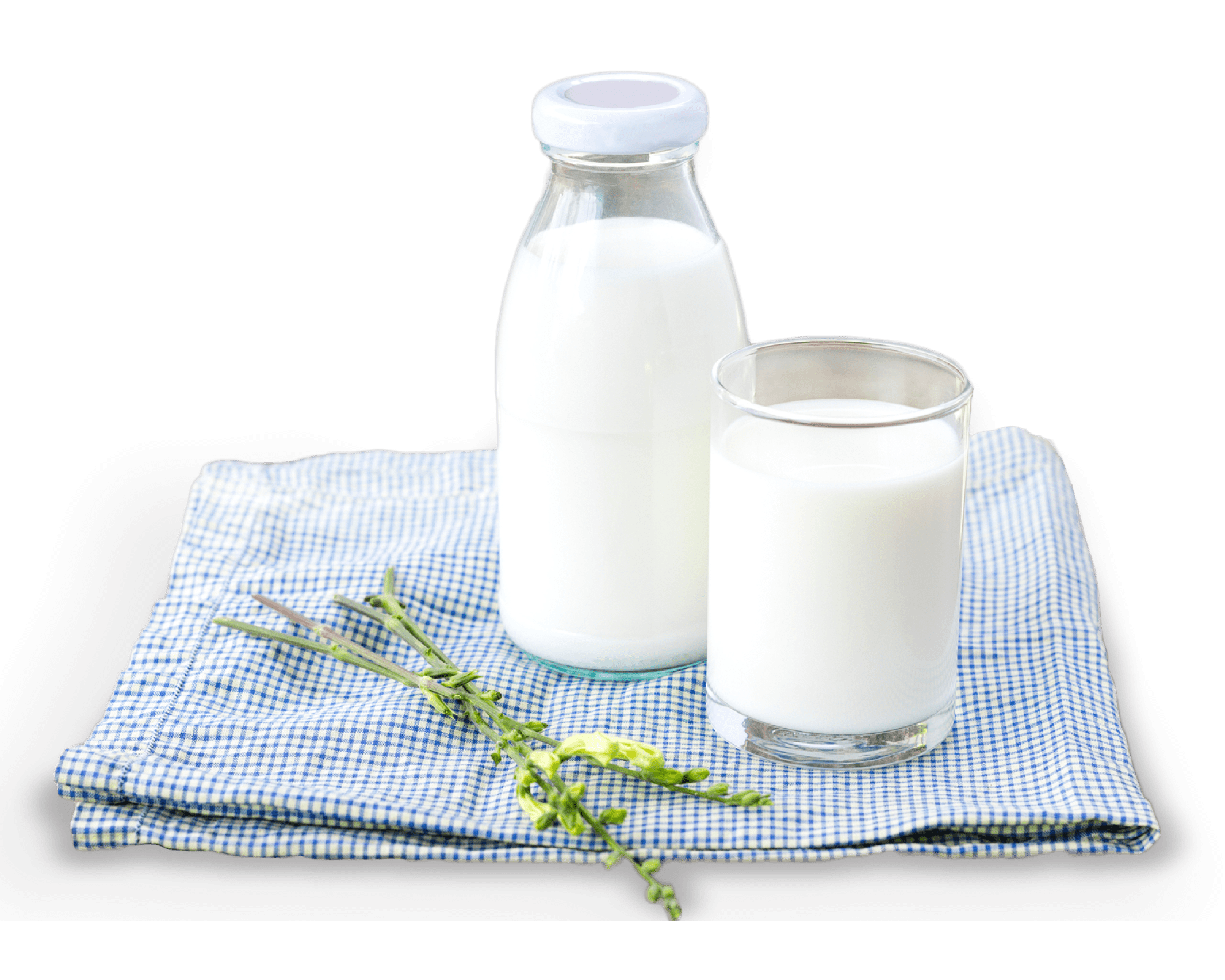
Plant-based beverages are different from milk in their nutritional composition and are different products with different nutritional characteristics. They do not provide the same naturally occurring nutrient package as milk. Milk provides a consistent package of 15 essential nutrients, while plant-based beverages are formulated products and their nutrient content varies by type and product.
Milk provides high-quality, complete protein containing all nine essential amino acids. Protein content and quality vary among plant-based beverages, and many provide less protein than milk.
Beyond individual nutrients, milk contains nutrients and other components that naturally occur together. The structure of the food and interactions among these components can influence how nutrients are absorbed and used by the body. Research indicates that some nutrients in milk, such as calcium, may be more bioavailable than those in certain plant-based beverages.
There is extensive research on the nutritional benefits of milk and dairy foods, including how these components work together, while research on the nutritional benefits of plant-based beverages is more limited and varies by product.
Source: Dairy Farmers of Ontario, Milk and Plant Based Drinks.
Milk can be a nutritious choice after physical activity because it naturally provides high-quality protein, carbohydrates, fluid and electrolytes that can support recovery following exercise.
One cup of milk provides about 9 grams of high-quality protein and contains all nine essential amino acids. Milk contains both whey and casein proteins, which can help support muscle repair and recovery following exercise.
Milk also provides carbohydrates, fluid and electrolytes such as sodium and potassium. Together, these nutrients can help support glycogen replenishment, rehydration and electrolyte replacement after physical activity.
What about chocolate milk?
Both plain and chocolate milk provide high-quality protein, fluid, carbohydrate and essential nutrients, that can support recovery following exercise. The choice between plain and chocolate milk can depend on the type and intensity of exercise and individual nutritional needs.
Plain milk can be a good choice when the focus is on protein, hydration, recovery and overall nutrition. Chocolate milk provides the same milk nutrients as plain milk, along with additional carbohydrate which may be useful when greater carbohydrate replacement is needed after demanding exercise. Research has found that chocolate milk can provide similar or, in some circumstances, greater recovery benefits than some sports drinks, particularly when additional carbohydrates are needed between demanding exercise sessions. (Amiri et al., 2019)
Source: Dairy Farmers of Ontario, Milk and Physical Activity.
Amiri M, Ghiasvand R, Kaviani M, Forbes SC, Salehi-Abargouei A. Chocolate milk for recovery from exercise: a systematic review and meta-analysis of controlled clinical trials. Eur J Clin Nutr. 2019 Jun;73(6):835-849. doi: 10.1038/s41430-018-0187-x. Epub 2018 Jun 19. PMID: 29921963.
One cup (250 mL) of milk provides 15 essential nutrients that support overall health. These include high-quality protein, vitamins and minerals involved in functions such as bone health, muscle function, energy metabolism and immune function.
The 15 essential nutrients in milk are:
Source: Dairy Farmers of Ontario, Milk Nutrition Facts.
Yes. Milk protein is a complete protein because it provides all nine essential amino acids that the body cannot produce on its own. Milk naturally contains both casein and whey proteins, which contribute to its high nutritional quality.
Source: Drewnowski, 2024; Dairy Farmers of Ontario, Milk Nutrition Facts.
Milk is a naturally occurring source of high-quality, complete protein, providing all nine essential amino acids. Milk proteins, including casein and whey, have a favourable amino-acid profile and are highly digestible, contributing to their high protein quality. Milk’s nutritional value goes beyond protein. Milk is also providing important nutrients such as calcium, potassium, B12, riboflavin and vitamins A and D. In fact, a glass of milk provides 15 essential nutrients.
Source: Drewnowski, 2024; Dairy Farmers of Ontario, Milk Nutrition Facts.
High-protein milk is milk that provides more protein per serving than regular milk. Typically, high-protein milks are made using ultrafiltration, a membrane-filtration process that separates milk components based on their size. Larger milk proteins, including casein and whey, are retained and concentrated, while smaller components can pass through the membrane. This results in milk with more protein per serving. (University of Guelph, Dairy Science and Technology eBook)
Regular milk is already an excellent source of high-quality, complete protein. A 250 mL glass typically provides approximately 8–9 g of protein, while ultra-filtered milk offers more protein per serving. Whether supporting an active lifestyle or simply meeting everyday nutrition needs, both can be options depending on individual nutritional needs, preferences and lifestyle.
Sources: Gavazzi et al., 2018
University of Guelph, Dairy Science and Technology eBook – Cheesemaking from Ultra-Filtered Milk (explanation of ultrafiltration and concentration of milk proteins).
Dairy Farmers of Ontario, Milk Nutrition Facts.
High-protein milk does not necessarily contain a different type of protein from regular milk. When produced through ultrafiltration, it can provide more of the milk proteins naturally present in milk, including casein and whey. The process uses membrane filtration to concentrate milk components. The exact composition and processing method can vary by product.
High-protein milk may appeal to consumers who are looking for more protein in a familiar, convenient food. While regular milk is already an excellent source of high-quality, complete protein, high-protein milk provides more protein per serving and can be another option for people with different nutritional needs, preferences and lifestyles. Milk also provides more than protein, contributing other essential nutrients as part of its overall nutritional value. The choice between regular and high-protein milk depends on individual nutritional needs and preferences, not on one being better than the other.
Sources:
Drewnowski A. Perspective: Milk and Dairy Provide Affordable High-Quality Protein and Merit Inclusion in the Protein Foods Group. Curr Dev Nutr. 2024 Dec 21;9(1):104539. doi: 10.1016/j.cdnut.2024.104539. PMID: 39896728; PMCID: PMC11787005.
Gavazzi-April C, Benoit S, Doyen A, Britten M, Pouliot Y. Preparation of milk protein concentrates by ultrafiltration and continuous diafiltration: Effect of process design on overall efficiency. J Dairy Sci. 2018 Nov;101(11):9670-9679. doi: 10.3168/jds.2018-14430. Epub 2018 Aug 30. PMID: 30172402.
University of Guelph. Dairy Science and Technology eBook – Cheesemaking from Ultra-Filtered Milk. Explanation of ultrafiltration and concentration of milk proteins. https://books.lib.uoguelph.ca/cheesemakingtechnologyebook/chapter/6-2-cheese-making-from-ultra-filtered-milk/

Get the hard-hitting science-based info with downloadable fact sheets from registered dieticians and nutritionists. Designed to support health care professionals in their discussions with patientsVIEW MORE RESOURCES FOR HEALTHCARE PROFESSIONALS

The School Programs team supports students and schools through curriculum-rooted resources, nutritional opportunities, and shared giving. All programs are FREE and accessible to students in Ontario LEARN ABOUT ONTARIO SCHOOL PROGRAMS